Review
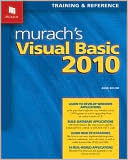
Whether you're a beginner or experienced programmer, Murach's Visual Basic 2010 will quickly teach you to develop and deploy professional object oriented database applications.
In section one you will be introduced to the .NET Framework and you will learn how to develop a simple Windows application using the form designer and the code editor.
Section two presents the various data types, control structures, as well as the core .NET classes. You will learn data validation and how to create your own business and database classes.
In section three you will learn how to develop professional database applications with the help of the new data sources feature and the new DataGridView control. You will also learn to directly access a database using ADO.NET code.
Section four will teach you the object oriented features of Visual Basic. You'll learn how to use inheritance, polymorphism, interfaces, and more.
The final section shows you how to work with text, binary, and XML files. You'll also learn how to work with multiple document interface(MDI), menus, toolbars, status bars, and help. The last chapter shows three ways to deploy your application, including the new ClickOne deployment feature.
Murach Visual Basic 2010 is a must read for both beginner and experienced programmers who wish to quickly learn to build Visual Basic 2010 applications at a professional level. With detailed coverage of IDE best practices, end of chapter exercises, non-trivial sample applications, and the unique paired-page format, Murach Visual Basic 2010 will have you building professional level real world applications in no time.
You may read other reviews for this book at Amazon.com.
Table of Contents
Section 1 Introduction to Visual Basic programming
Chapter 1
An introduction to Visual Studio
Chapter 2
How to design a Windows Forms application
Chapter 3
How to code and test a Windows Forms application
Section 2 The Visual Basic language essentials
Chapter 4
How to work with numeric and string data
Chapter 5
How to code control structures
Chapter 6
How to code procedures and event handlers
Chapter 7
How to handle exceptions and validate data
Chapter 8
How to work with arrays and collections
Chapter 9
How to work with dates and strings
Chapter 10
More skills for working with Windows forms and controls
Chapter 11
How to create and use classes
Chapter 12
How to debug an application
Section 3 Database programming
Chapter 13
An introduction to database programming
Chapter 14
How to work with data sources and datasets
Chapter 15
How to work with bound controls and parameterized queries
Chapter 16
How to use ADO.NET to write your own data access code
Section 4 Object-oriented programming
Chapter 17
How to work with default properties, events, and operators
Chapter 18
How to work with inheritance
Chapter 19
How to work with interfaces and generics
Chapter 20
How to organize and document your classes
Section 5 Other programming skills
Chapter 21
How to work with files and data streams
Chapter 22
How to work with XML files
Chapter 23
How to use LINQ
Chapter 24
How to enhance the user interface
Chapter 25
How to deploy an application
Resources
Appendix A
How to install and use the software and files for this book
Index
Read other reader reviews
|